
IRS Stimulus Payment: Decoding Eligibility and Charting Your Financial Future
The air around us crackles with an almost palpable energy these days, doesn't it? It feels like we're on the cusp of something truly transformative, a shift in how we think about the very fabric of our economy and the role of the individual within it. For years, we’ve debated the grand theories, the subtle levers of monetary policy, and the complexities of global trade. But now, it seems the conversation is getting wonderfully, radically simple: what if we just put money directly into people’s hands?
This isn't just idle speculation; it’s the burgeoning "Big Idea" that’s starting to take root, a fascinating evolution in our understanding of economic empowerment. When I first heard the details of President Trump's proposed "tariff dividend", I honestly felt a jolt of pure excitement, a sense that we're finally daring to think bigger. Imagine: a $2,000 check for families making $100,000 or less a year, funded by the very tariffs designed to rebalance our trade. A "tariff dividend"—essentially, a portion of the money collected from import taxes, or duties, being returned to the people, a direct feedback loop from global commerce to your kitchen table.
The Seeds of a New Economic Paradigm
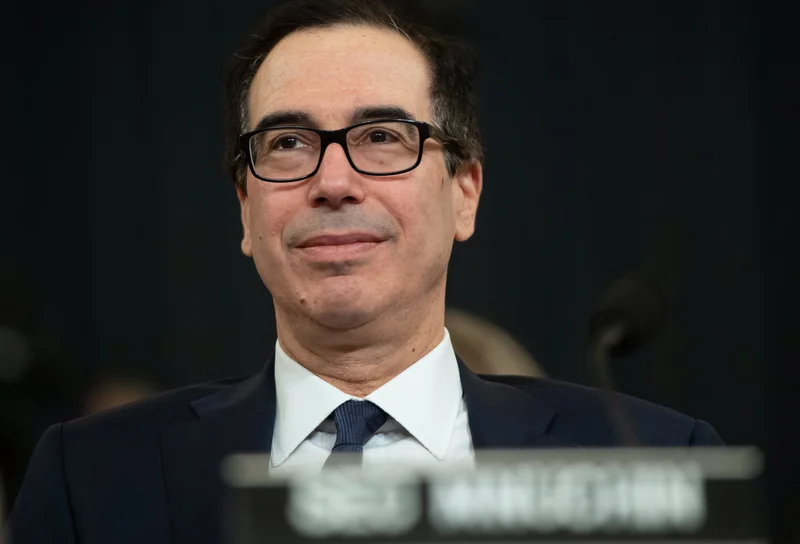
Now, Treasury Secretary Scott Bessent has been clear: no final decision has been made. He's mentioned that there are "lots of options," and that this dividend could even take the form of tax relief instead of a direct check. But let's not get bogged down in the minutiae of the "how" just yet. What truly excites me isn't the specific mechanism, but the intent, the foundational concept of direct payments. This is a profound shift from the traditional trickle-down approach, a direct acknowledgement that the strength of an economy is, ultimately, the strength of its citizens.
Think about it: during the darkest days of the pandemic, those stimulus checks weren't just a lifeline; they were a proof-of-concept. They demonstrated, in stark, undeniable terms, the immediate, tangible impact that direct infusions of capital can have on everyday lives. The sheer audacity of these new proposals, coming on the heels of that experience, is just staggering—it means we're truly entering a new era where the conversation isn't just about jobs, but about direct citizen empowerment, a concept that's been simmering in academic circles for decades and now, suddenly, feels tantalizingly close to reality.
Of course, the skeptics are already out there, waving their calculators. Erica York from the Tax Foundation, for instance, points out the numbers: if 123 million families got $2,000, that's nearly $300 billion, while projected tariff revenues for 2026 are closer to $217 billion. And yes, the national debt is a colossal $38 trillion. But this isn't a brick wall; it's a design challenge! It's an invitation to innovate on funding, to explore new economic models, or to simply acknowledge the true scale of what empowering a nation truly means. It reminds me of the early days of the internet, when people scoffed at the idea of "information superhighways" being accessible to everyone. The initial costs looked astronomical, but the vision, the societal benefit, eventually propelled us forward.
Beyond the Headlines: What This Means for Us
This isn't just about one proposal, either. It’s part of a broader current. Remember President Trump's even more audacious "DOGE dividend" idea earlier this year? A potential $5,000 check, funded by savings identified by Elon Musk’s "Department of Government Efficiency." While details are scarce, the very notion speaks to this same spirit of direct return to taxpayers. And then there's Senator Josh Hawley's American Worker Rebate Act, pushing for checks between $600 and $2,400. None of these federal proposals are set in stone, mind you, and the internet is, unfortunately, rife with scams trying to capitalize on this hope. So, we must always exercise caution and verify information.
But this isn't just theoretical. Look around! States like New York, Pennsylvania, Georgia, Colorado, and New Jersey are already rolling out their own inflation relief checks and property tax rebates. The ANCHOR program in New Jersey, for example, is putting up to $1,750 back into homeowners' pockets. These aren't just isolated events; they're the tangible, real-world examples that pave the way for broader, federal programs. They show us that the machinery for direct payments exists and works.
This isn't just about economic policy; it's about re-imagining the social contract. What could a consistent, direct dividend mean for the stability of families, for local economies, for the entrepreneurial spirit? How might it fundamentally alter consumer behavior, shifting the focus from mere survival to genuine aspiration? What new industries could emerge if this became a predictable part of the economic landscape? The possibilities are immense, a vibrant tapestry waiting to be woven. We must also consider the ethical implications: how do we ensure these programs are implemented equitably, without creating new dependencies or inadvertently stifling innovation? It's a balance we'll need to strike with care and foresight. For now, the hopeful chatter in online forums, the discussions among friends, the very idea that you could directly benefit from the nation's economic activity—it's a powerful thing. It's an exciting time to be alive, watching these bold ideas take shape.
The Future Isn't Just Coming, It's Being Designed
The whispers of "stimulus" and "dividends" are more than just political talking points; they represent a fundamental shift in our collective consciousness. We're moving towards a future where direct economic empowerment isn't a fringe idea but a central pillar of prosperity. It's not about handouts; it's about recognizing the inherent value and contribution of every citizen. This isn't just policy; it's a profound re-evaluation of how we build a stronger, more resilient society, one direct payment at a time. The road ahead is complex, filled with challenges and details to iron out, but the direction is clear: a more direct, more human-centric economy.
Tags: irs stimulus payment
Laura Ingraham: Another Day, Another Outrage?
Next PostAvelo Airlines: The Next Frontier in Accessible Air Travel?
Related Articles